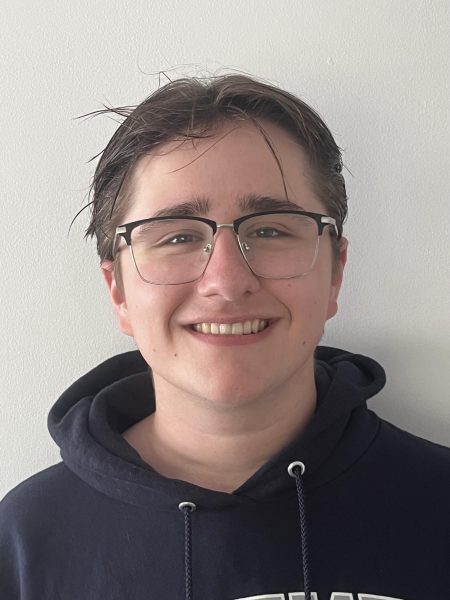

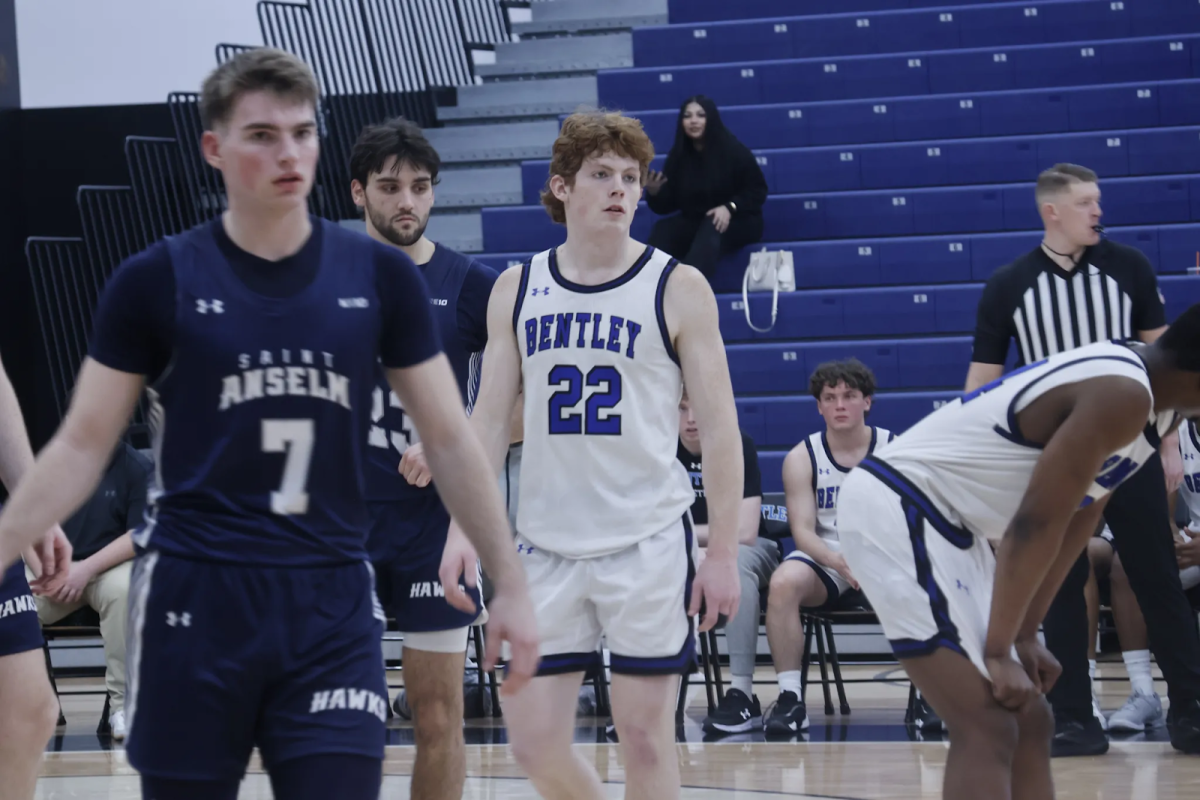
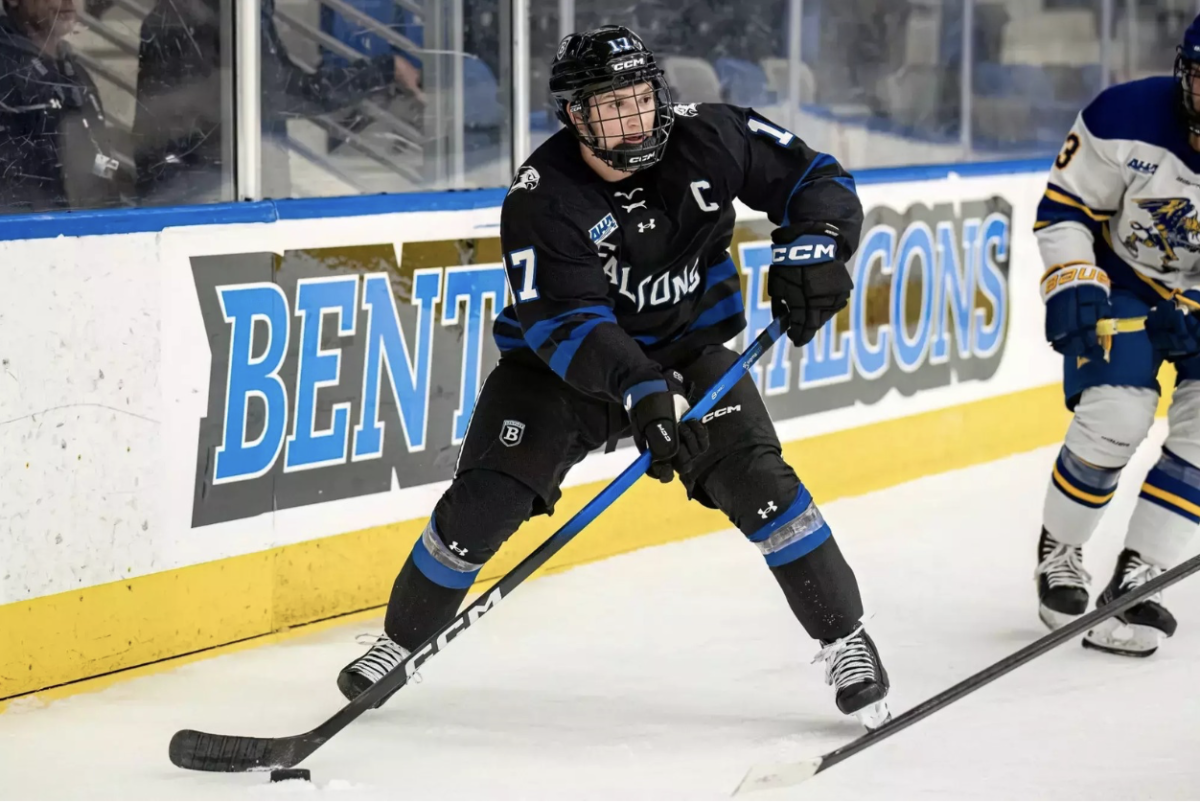
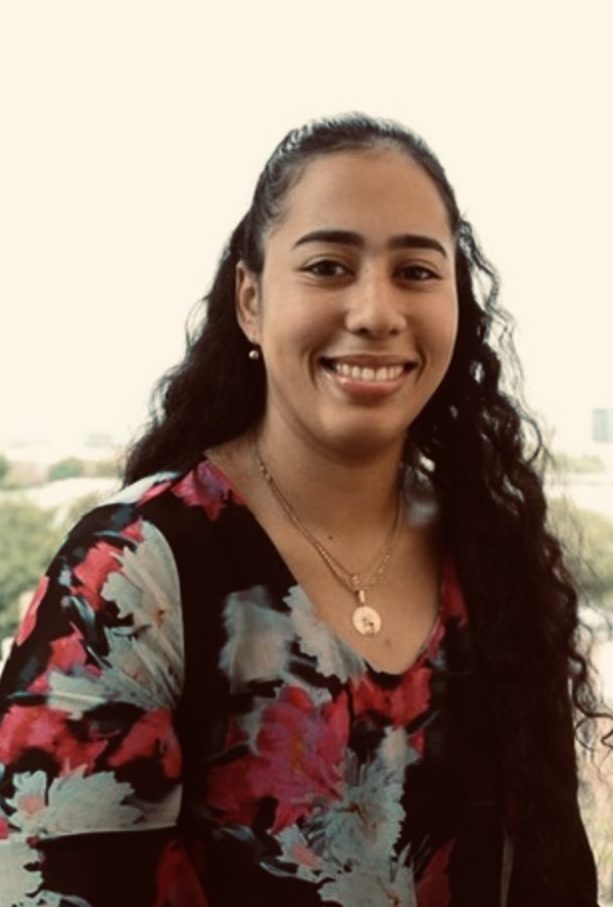

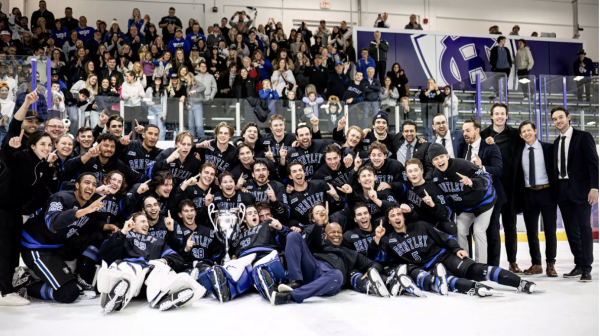
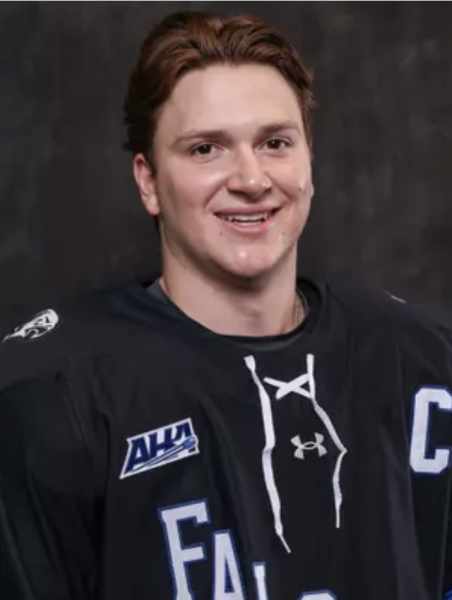
After leading the Bentley Falcons to their first Atlantic Hockey America (AHA) cup championship win Stephen Castagna takes time to reflect on his college hockey experience and how it will help him in post-college professional life. Castagna grew up in North Vancouver, British Columbia Canada, now is the leading forward and Captain of the Bentley Falcons Ice hockey program. He leads the team in assists and notched 25 points on his run to the AHA cup win, here he talks about his life as a student athlete and what it takes to be the captain.
Growing up in Canada, what drew you to Bentley and to Waltham to play for a program that might not be as nationally known as some other Division I schools?
I wasn’t really exposed to US college hockey until I was 15 and even then, I only heard of the big-name schools. Bentley stood out in terms of the full student-athlete experience. I remember talking to the old assistant coach, doing my own research, and just learning how good of a business school Bentley is. Ultimately, I was drawn to Bentley because of the post-hockey opportunities that Bentley would set me up for, on top of the hockey program.
What do balancing travel, practice, and classes look like for you during the season?
I think this is the most challenging part of being a student-athlete, it involves a lot of discipline and time management. We are at the rink anywhere from 3-4 hours on a practice day then usually have 2-3 classes after that, on weekends we are playing games which can involve missing classes or limited homework time. Communicating with professors and coaches whenever we know a conflict is coming up is a must. It can also be a blessing in disguise; you have a built-in outlet in practice and games to de-stress, plus you have 30 teammates who are there to support you and have fun with.
As a senior and team captain, what leadership lessons do you hope to carry into your professional career, wherever that takes you?
On top of the teamwork, coachability, and resilience skills that hockey has provided me, being a captain has helped me develop leadership skills that I hope to carry with me through life. The two most important skills I hope to take with me are communication and motivation. Being able to clearly convey a message from the coaches to 30 teammates is a skill that being a captain has taught me and being able to communicate with the coaches in a professional manner. The second one, motivation, will hopefully be useful down the road in my professional career. Being able to motivate 30 guys towards a shared goal is a demanding skill, I have learned many lessons that I will carry with me.
After last year’s run through the AHA tournament, what goes into preparing for elimination games, and how do you manage that pressure alongside college life?
Our coaches do a great job of preparing us for every game and last year’s playoffs were no different. There is natural added pressure you put on yourself, but once you get out there for the game, the pressure kind of goes away and you can just play. In terms of balancing, athletics with college life, having a social life, as well as demanding hockey and school commitments, is a benefit. Each one gives you an outlet from the others. When you are facing pressure because of a big game, you can hang out with your teammates and relax or use school to distract yourself from it. Although, the games with the most pressure are usually the games we look forward to the most.
Do you hope to continue playing hockey after college, and how do you think your experience at Bentley has prepared you for that next step?
I haven’t decided yet if I am going to keep playing or hanging up the skates, but I feel confident that Bentley has set me up for success no matter what route I choose. For hockey, the coaching and support staff push you to get better every day while treating you like a professional. They have taught me how to approach life and hockey with curiosity. Off the ice, I feel Bentley has also prepared me for the next level. The balance of being a student-athlete at a prestigious school like Bentley forces you to mature quickly and master time management. If I do get the chance to play pro hockey, I feel that the combination of all these skills I learnt at Bentley will help me compartmentalize my energy and focus on being the best hockey player I can be.
What stands out as your favorite on-ice memory as a Falcon?
Without a doubt, winning the AHA championship at Holy Cross last year. The whole playoff run was amazing, we felt support from students, teachers, and the Waltham community, then capping it off with a championship was amazing. Going down early in that game and coming back to win, it felt like the theme of the whole season, we were the underdogs and the feeling of winning that trophy was something I’ll remember forever.
How have you noticed fan support and interest in Bentley hockey grow during your time here?
Throughout my four years, we have always felt the support of the Bentley and Waltham community, but in last season’s playoffs and this year I think it has grown a lot. Just in a fan attendance aspect, our games have started to fill up, particularly the student section, it’s awesome to see so many students at our games and hearing them get rowdy throughout the game. Our team feeds off it, we hear it, and we feel the support, it gives us that extra push and leaves us feeling proud.
Finally, what do kind of legacy do you want to leave with your college hockey career, and what kind of legacy do you hope to attain with hockey after college?
I’ve never really thought about leaving a ‘legacy’ with my college hockey career, but ultimately, I hope to leave the Bentley Hockey program better than I found it. Not just in championships or wins and losses, but in terms of the culture and growing the program around campus. I have loved my time at Bentley and a lot of that has come from the hockey program, so I hope incoming guys get to experience that too.
GP G A PTS
134 2 6 64 90