




Blue emergency phones are a common sight across Bentley University’s campus, found along walkways, near residence halls and outsideacademic buildings. So familiar are the blue boxes that many students pass them daily without a second thought.
Yet on a campus where practically every student carries a cellphone and campus safety officials report that blue phones are activated about onceper semester, the system raises a question – why does Bentley continue to maintain them?
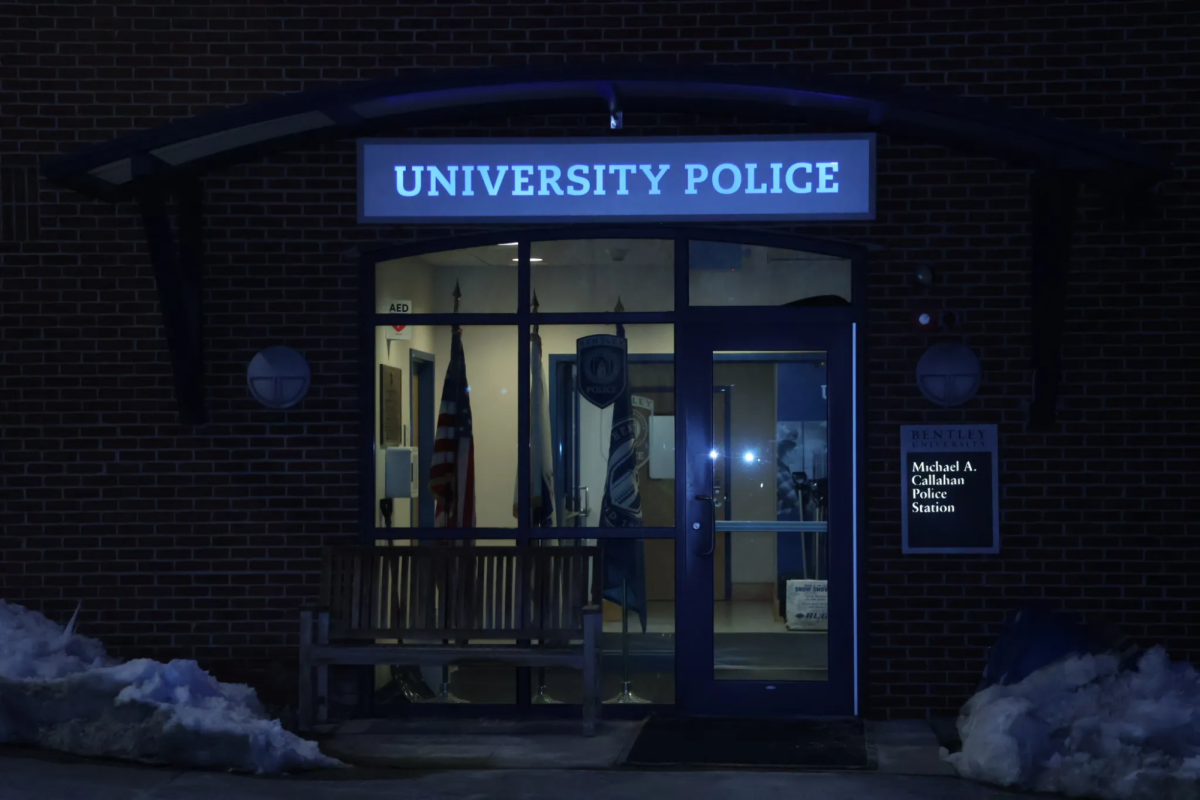
The phones connect directly to the Bentley Police Department’s dispatch center at the press of a button, allowing an officer to respond immediately. Some units are also equipped with cameras, integrating them into the university’s broader security network.
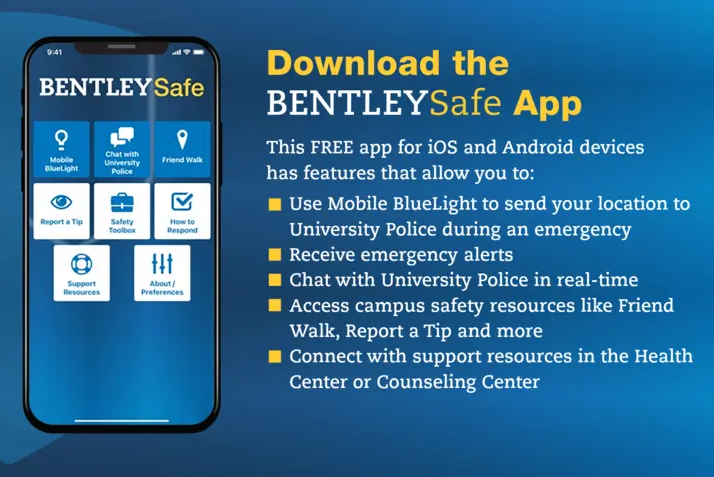
The system has long been a visible part of campus safety, but some students question its relevance in an era of near-universal mobile access. Students are encouraged to download the Bentley Safe app, which allows users to message police directly, share their location during anemergency and access other safety resources. Bentley Police’s phone number is also printed on every student ID.
“I find it strange to have so many phones around campus,” said Mara Mohn, an international student. “This isn’t really normal where I come from, it makes me question the need for them. We all just have phones in our pockets these days.”
Junior Franchesca Meija-Dorantes said she has never known anyone who has used one. “It feels like something you never really think about,” she said. “It must be really rare.”
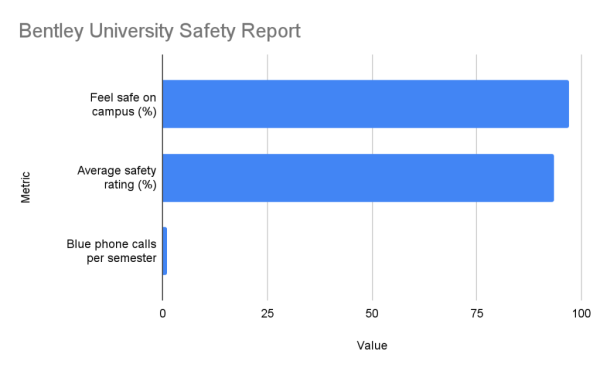
Data from Bentley police appears to support that perception. According to Police Chief Francis Bourgeois, the blue phones are activated infrequently, averaging roughly one call per semester. False or hoax calls are “practically nonexistent,” he said.
“If it’s used twice in a semester, that’s a lot,” Bourgeois said.
Still, Bourgeois said the phones remain operational and are not viewed as a burden. They were installed more than 25 years ago, and the system required a one-time purchase and installation cost. There’s little ongoing expense beyond occasional maintenance. A campus wide redesign three years ago addressed water damage issues and added additional units.
“I don’t know that it costs us anything now,” Bourgeois said. “It was the one-time cost of purchasing and installing them.”
Bourgeois acknowledged that the phones “had greater value 25 or 30 years ago than they do today,” he said. “We live in a world now wherepractically 100% of our students have cellphones.”
But, the department has no plans to remove or scale back the system.
“There’s a value to the visibility of them,” Bourgeois said. “Knowing there’s a blue phone within view almost anywhere on campus makes people feel safer. It’s a backup system.”
That sense of security appears to align with broader trends in campus safety sentiment. Annual surveys conducted by Bentley show that between 97% and 98% of students, faculty and staff report feeling safe on campus. The average safety rating stands at 4.67 out of 5, or 93%, according to university data.
While blue phones play a relatively small role in day-to-day emergency communication, Bourgeois said their simplicityremains an advantage in moments of crisis. “It’s very user-friendly,” he said. “If you’re in trouble, you push a button, and our dispatcher answers.”
The Bentley Safe app, he added, essentially places the function of a blue phone into students’ pockets. “You technicallyhave that blue phone on your phone now,” Bourgeois said.
Nevertheless, the physical presence of the phones serves a purpose beyond usage metrics, he said. “Why take down a system that’s already in place?” Bourgeois said. “We can just make it better.”
For many students, the blue phones fade into the background of campus life, unnoticed and unused. But for Bentley PD, their value lies in the reassurance they provide.