



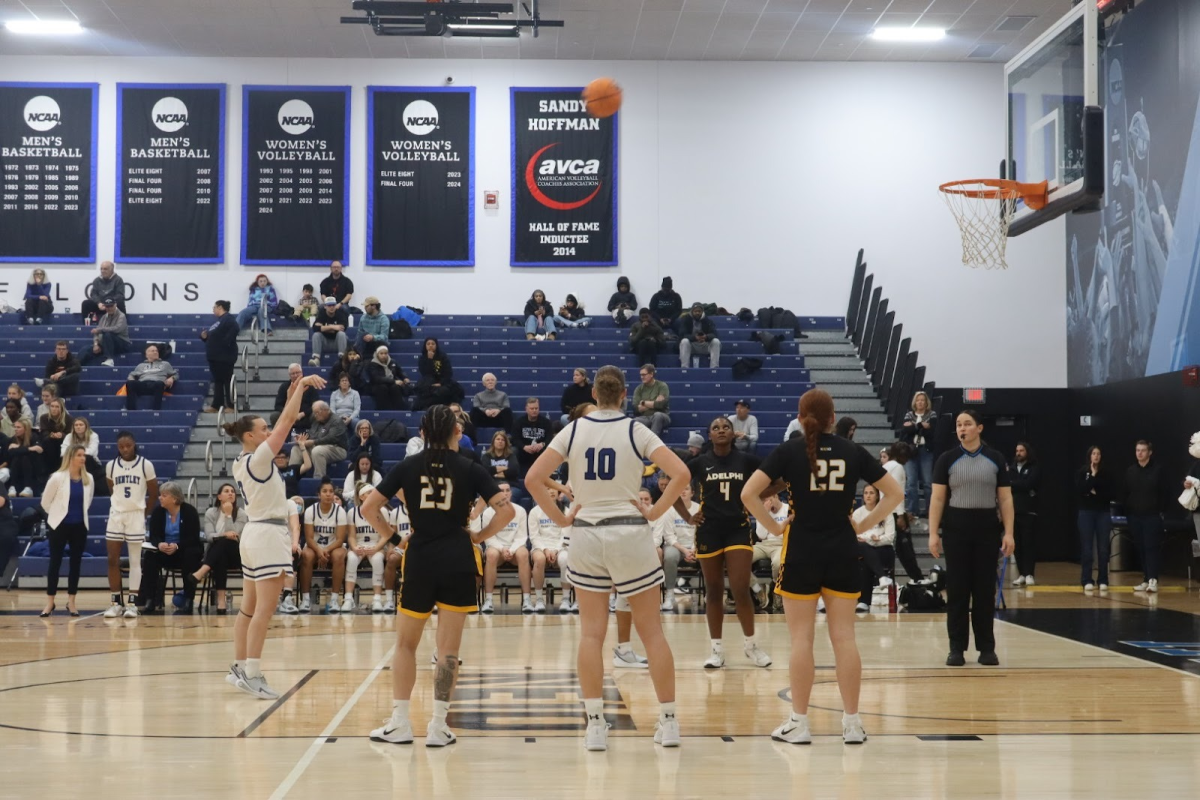
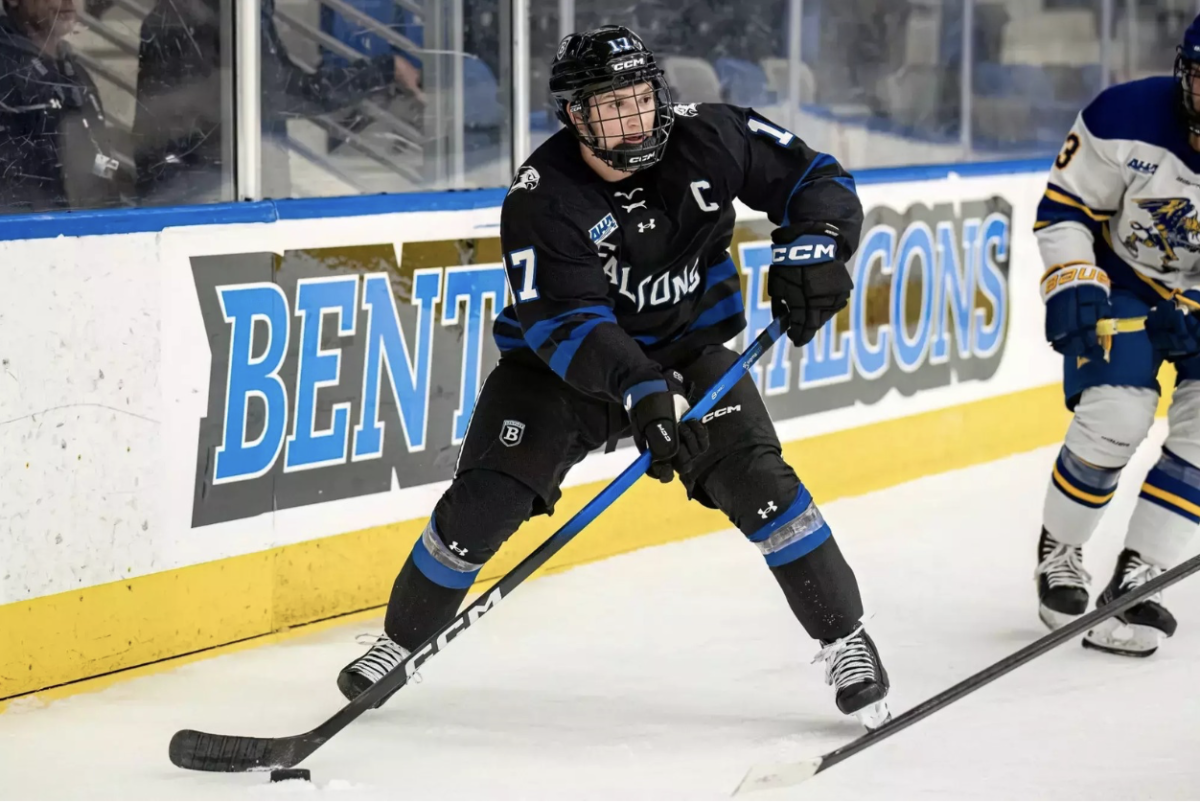









Success on the basketball court is a lengthy process, and for Bentley men’s basketball standout Cooper Farrall, preparation is as much about recovery and discipline as it is about scoring points.
Farrall, who is managing Type 1 diabetes, emphasized that nutrition is a crucial part of recovery. After his games, he prioritizes carbohydrates and protein intake to replenish energy and support muscle repair.
Injury prevention is a shared focus between athletes and medical professionals alike. Dr. Timothy Foster of Newton Orthopedic Clinic said knee injuries are the most common issues she sees among basketball players, including sprains, tendon injuries (such as jumper’s knee), and ligament tears.
He emphasized that many of these injuries are reventable through proper strengthening, stretching and nutrition. Dr. Foster also noted that physical therapy is not only for injured athletes, but an important tool for proactive preparation in active healthy athletes as well.
“Rehabilitation should begin before an injury happens,” he said, stressing that early preparation staves off injury and lessens the chances of the injury seriously harming the athlete.
Recovery, Farrall said, is nonnegotiable. Ice baths, stretching, and sleep are built into his daily habits, especially post-game. He sets aside about 20 minutes every night to stretch, which he said helps reduce existing soreness and maintain mobility over the course of the season.
Farrall, the Falcons’ leading scorer and a first-time starter this season, averaged nearly 30 minutes per game while navigating the physical demands of aDivision II schedule that stretches from October through March. Consistency has been the foundation of his routine.
We probably lift three times a week and recover as much as possible,” Farrall said. “It’s a long season, so staying consistent and taking care of your body is the most important thing.”
As a forward who absorbs frequent contact in the paint, Farrall has also learned the importance of listening to his body. Late in the season, when he averaged nearly 20 points and nine rebounds over a 10-game stretch, he adjusted his workload to make sure he was staying fresh for each game.
“Playing 30 to 35 minutes a game takes a lot out of you,” Farrall said. “I pulled back a little, less gym time, fewer shots, and focused on letting my body recover between games.”
For Farrall, that mindset has translated into durability, confidence and performance. Whether chasing rebounds or knocking down open shots, he creditspreparation away from the spotlight for his success on it.
“You spend your whole life shooting,” Farrall said. “When game time comes, it’s all in your head. Just let it fly.”

