









As generative AI tools like ChatGPT become part of everyday student life, one question continues to surface across college campuses: What does this mean for learning?
At Bentley University, that conversation isn’t happening in the background, it’s happening inside faculty workshops, curriculum design sessions, and innovation labs through the Badavas Center for Innovation in Teaching and Learning.
While students experiment with AI for brainstorming, outlining, and research support, the Badavas Center is working directly with professors to explore how generative AI can be implemented intentionally, ethically, and effectively in the classroom.
The Badavas Center partners with faculty to design innovative teaching strategies, adopt new technologies, and rethink classroom engagement. With generative AI on the rise, the center has begun examining how tools like ChatGPT and other AI platforms can enhance, rather than replace, critical thinking and academic growth.
Rather than framing AI as something to fear, many educators are beginning to explore how it can become a learning support tool when used thoughtfully.
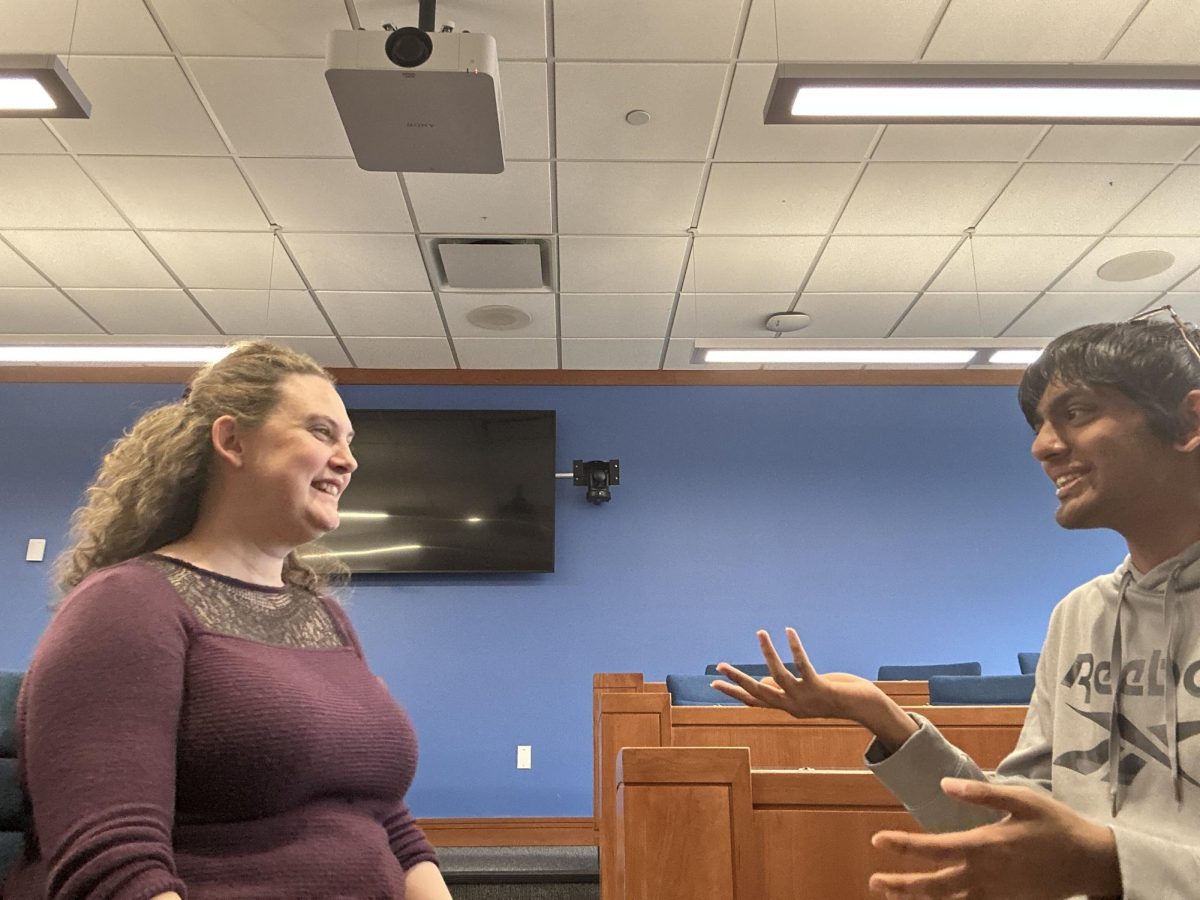
For students already navigating AI in their academic work, that support can feel immediate. Hannia Velasquez, a Bentley student taking advanced math and statistics courses, says generative AI has become a regular part of her study routine.
“In my higher-level math classes, it helps break things down step by step when a concept doesn’t fully click in class,” Velasquez said. “It’s almost like having a tutor available whenever you need it.”
For Velasquez, the tool isn’t replacing her thinking, it’s helping her deepen it. “Sometimes it helps me come up with points I wouldn’t have thought about before,” she explained.
“It helps melook at an article from a different angle and connect it to something I already know.”
Across higher education, AI discussions often focus on academic dishonesty. But many educators are beginning to ask a different question: How do we teach students to use AI well?
That distinction matters. If AI will exist in nearly every major industry, from finance and marketing to healthcare and entrepreneurship, then understanding how to collaborate with it may soon become a professional competency. Velasquez believes th key is how students approach the tool.
“You should use it like a writing tutor,” she said. “I always go into it already knowing what I want to do with an assigment, and then I ask AI for suggestions or different perspectives.”
She draws a clear line between helpful support and academic dishonesty. “If you’re just copying and pasting what AI says, that’s obvious,” Velasquez said. “But if you’re building on ideas and working with it, that’s where it becomes helpful.”
Students at Bentley already have strong opinions about AI in the classroom. Some see it as a productivity tool. Others worry it weakens critical thinking. Many sit somewhere in between. Paul Dulchinos sees both benefits and concerns when it comes to AI in the classroom.
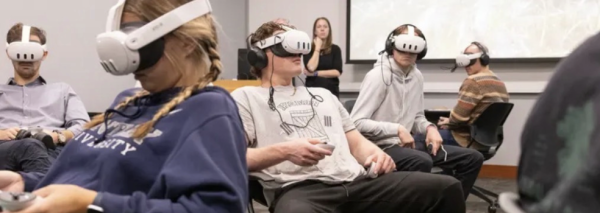
“AI can definitely help with brainstorming or getting started on an assignment,” Dulchinos said. “But I think students still need to make sure they’re doing the thinking themselves. Otherwise it’s easy to rely on the tool instead of really understanding the material.”
For many students, the question isn’t whether AI should exist in education, it’s how it should be used responsibly while still encouraging independent thinking.
By integrating AI thoughtfully into assignments, faculty may be able to model best practices instead of leaving students to navigate it alone. The work being done at the Badavas Center isn’t just about keeping up with trends. It’s about defining what responsible innovation looks like in higher education now and in the future.
Velasquez believes learning to work alongside AI may ultimately become a valuable professional skill. “Companies are already integrating AI into their systems,” she said.
“Learning how to ask the right questions and use it efficiently is going to be important.”
Still, she emphasizes that technology should support learning—not replace it. “Like any powerful tool, it’s really about how responsibly you use it,” she said.
As AI continues to evolve, the key question becomes: Will students graduate having learned how to think alongside AI, or despite it?
For now, one thing is clear: AI isn’t leaving the classroom. The real story is how Bentley is choosing to use it.